Skip to content

HOW HALO WORKS

Faster turns.
Fewer follow-ups.

One job. One shared source of truth.
From the first scope to the final walkthrough—everyone stays on the same card.

Corporate visibility.

Field clarity.

More time for residents.

Built around the work. Connected by HALO.

THE JOURNEY OF ONE UNIT

Less chasing.
More moving forward.

The property team, back office, and field crew see the same job through the lens they need. Follow this illustrative turn from scope to ready.

01 / PROPERTY TEAM → BACK OFFICE

Scope it once.

Add the unit, required services, move-in deadline, and PO. The job starts with a clear brief—not a chain of texts.

ONE CARD HOLDS THE CONTEXT

Scope, notes, photos, and approvals travel with the unit. No retelling the story every time someone joins the job.

A clear start. Fewer loose ends.
02 / BACK OFFICE → FIELD CREW

Give the crew
a clear plan.

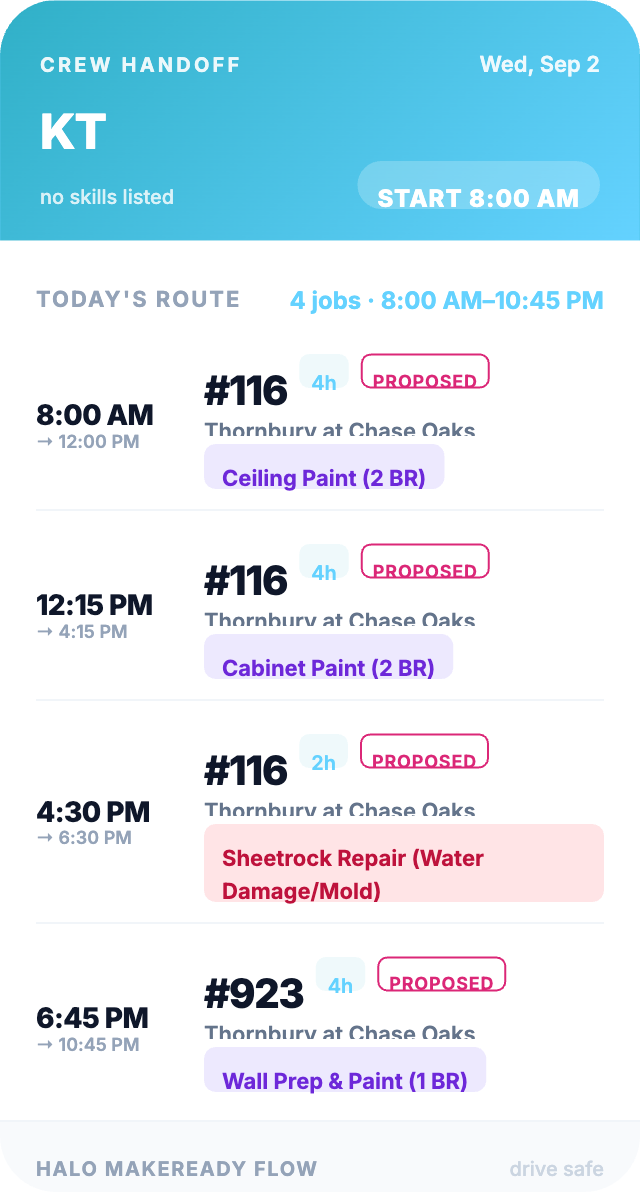
AI helps organize the work. Dispatch reviews the plan and assigns the crew. The field team gets its jobs, services, and handoff in one place.

INTELLIGENCE, WITH A HUMAN IN CONTROL

A proposed route is a starting point. Dispatch makes the call on timing, priorities, and who does the work.

View the actual KT handoff card ↗

Separate product example: the supplied four-job, proposed route.

Everyone knows the next move.

03 / FIELD CREW ↔ PROPERTY TEAM

Keep the
job moving.

Crews update the services as work happens. Questions, photos, and change orders stay attached to the job—so managers can make the next decision with context.

JOB-LINKED CONVERSATION · EXAMPLE

Unit #116 · Additional prep needed before cabinet paint. Please review the updated scope.

Scope reviewed and approved. Please continue.

A decision on the same card. Not another phone chase.

Less “any update?” More forward motion.

04 / COMPLETED WORK → VERIFIED READINESS

Know it’s ready.

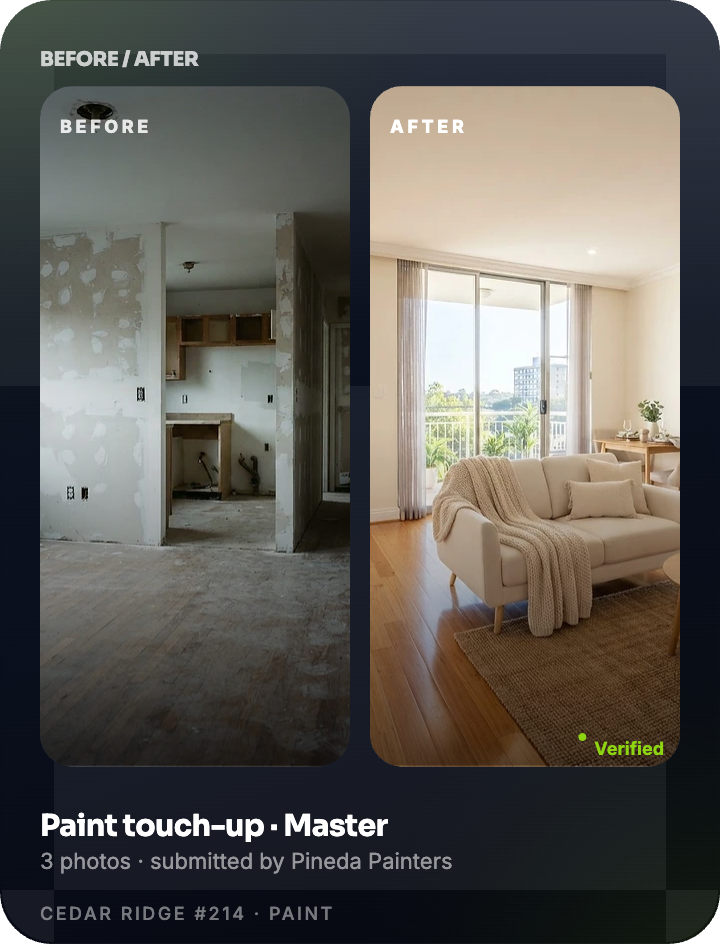
Review completed services, before-and-after photos, and the final work record. Resolve rework before calling the unit ready.

THE FINISH HAS EVIDENCE

The work clock ends when the last service is complete. Readiness is verified separately. If a callback opens, its time stays visible through dispatch sign-off.

Explore the before-and-after card ↗

Illustrative product asset; not photos of this sample unit.

Confidence to move to the next step.

ONE SHARED RECORD. TWO CLEAR ADVANTAGES.

A clearer portfolio.
A calmer property day.

Leadership sees the exposure. On-site teams see the next action.
The work underneath is the same.

FOR CORPORATE & REGIONAL LEADERS

Know where
time is costing you.

Bring the cost of empty units, validated work time, and the jobs that need attention into one view.

VACANCY EXPOSURE30 daysEstimated rent exposure across vacant units.
WORK-TURN TIMEStart → finishValidated work events. Visible exceptions.

See blocked and at-risk units before the next status meeting.

FOR ON-SITE PROPERTY TEAMS

Your residents
need you. Go be there.

Open HALO, see what matters, and get back to the people in front of you.

What’s ready?

Completed services and readiness evidence.

What changed?

Job updates, photos, and messages in context.

What needs me?

Approvals, missing POs, and decisions to unblock work.

Explore HALO for property managers ↗

HALO connects the conversation. Archangel Contractors brings the service team. Scope, approvals, and accountability stay attached to the work.

PUT THE OPPORTUNITY IN PERSPECTIVE

What is one
vacant day worth?

Use your numbers to explore the rent exposure tied to avoidable vacancy. This is a scenario—not a savings promise.

Your property. Your assumptions.

Illustrative defaults below. Adjust the values to explore a scenario. Nothing is submitted or saved.

Average monthly rent per unit (USD)

$1,800

Vacant units in this scenario

20 units

Vacant days to reduce per unit

1 day

All units use the same rent and days for this estimate. Use a weighted average rent for mixed unit types.

POTENTIAL REDUCTION IN RENT EXPOSURE

$1,200

20 vacant units × 1 day × $60 daily rent

Per unit, per day$60
All selected units, per day$1,200

A day recovered creates an opportunity. Revenue is only realized when the unit is leased and occupied.

THE MATH, IN PLAIN SIGHT

Monthly rent ÷ 30 × vacant units × days reduced. Uses a fixed 30-day month; displayed amounts are rounded, but the calculation uses full precision. Excludes concessions, leasing downtime after readiness, operating costs, and demand. This is potential rent exposure—not a guarantee that HALO will recover it.

CLEAR NUMBERS. CLEAR DEFINITIONS.

Better decisions start
with honest clocks.

A vacant unit and an active job are not the same thing. The reporting story needs both—and a clear account of exceptions.

01 / VACANCY

The property clock.

Track vacant days within the selected 30-day window, using unit-level rent and verified vacancy dates. Readiness does not mean occupancy.

02 / WORK-TURN TIME

The work clock.

Start with the actual field-work event. End at the last completed service. Missing or stale events belong in a review queue—not in a misleading average.

03 / EXCEPTIONS

Nothing swept away.

Keep rework visible until dispatch signs it off. A five-day operational view must disclose excluded records and show genuine longer turns separately.

Measurement principles for HALO reporting. The examples on this page do not validate production data or change the app’s calculation rules.

THE NEXT TURN CAN FEEL DIFFERENT.

See HALO
on your property.

Bring a real workflow. See how the property team,
back office, and field crew stay connected.

HALO + Archangel Contractors · Less scattered. More in sync.